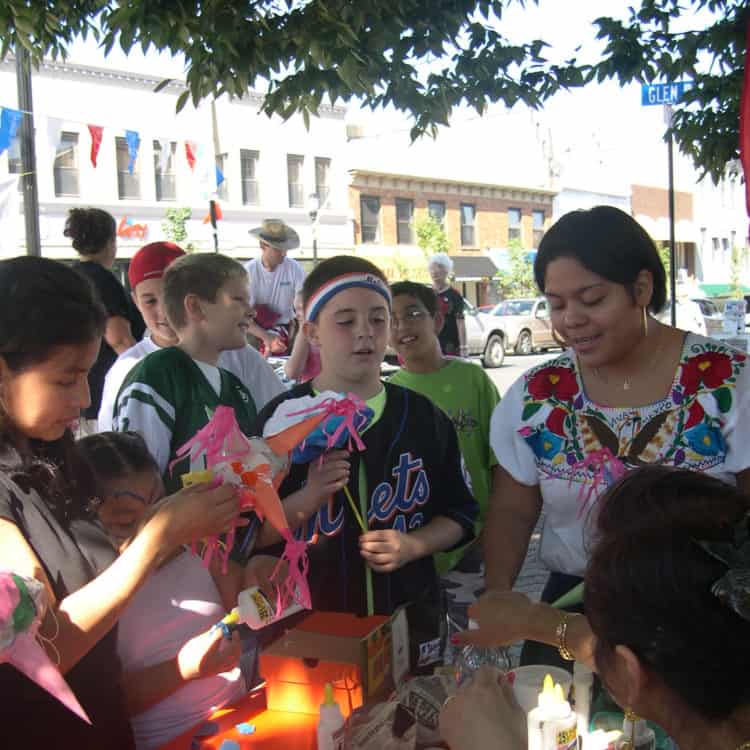
Kraslice Czechoslovakian decorated eggs by Kepka Belton of Kansas. Belton has received a National Heritage Fellowship from the National Endowment for the Arts. Photograph courtesy of the Folk and Traditional Arts Program, National Endowment for the Arts. From the Masters of Traditional Arts DVD-ROM, produced by Alan Govenar and published by ABC-CLIO.
 

AFS 2010 Annual Meeting, October 13-16, Nashville, Tennessee: Invitation for Participation

“Lay and Expert Knowledge” is the theme for the American Folklore Society's 122nd annual meeting, to be held at The Hilton Nashville Downtown in Nashville, Tennessee, on October 13-16, 2010.   

The members of this year’s Annual Meeting Committee hail from a variety of places and institutions: from Nashville, former AFS President Bill Ivey of Vanderbilt University, Roby Cogswell and Dana Everts-Boehm of the Tennessee Arts Commission, Jay Orr of the Country Music Foundation, and musician and writer Larry Nager; Mark Jackson, Patricia Gaitely, and Martha Norkunas of Middle Tennessee State University in Murfreesboro; Evan Hatch (President of the Tennessee Folklore Society) from the Arts Center of Cannon County in Woodbury, Tennessee; Scot Danforth of the University of Tennessee in Knoxville; David Evans of Memphis State University; Teresa Lloyd and Ted Olson of East Tennessee State University in Johnson City; and Katy Leonard of Birmingham-Southern College in Birmingham, Alabama.

Meeting Theme: Lay and Expert Knowledge 

Not everyone is a novelist, but everyone tells stories.  Not everyone is an artist or a theologian, but everyone works to give satisfying order to the material world and the cosmos.  Not everyone is a politician, but everyone negotiates power relationships in his or her social milieu.  And not everyone is a doctor, but everyone looks after body and soul according to conceptions of health shaped in long-term conversation with other people. 

The "lore" studied by folklorists has long been the object of learned suspicion.  In the Middle Ages, theologians labored to eradicate peasant superstition.  In the early modern period, grammarians purified the rudeness of vernacular speech and early scientists criticized "popular errors."  With the triumph of professionalization in the late nineteenth century, medical authorities shut down the practices of midwives and nutritionists criticized the traditional diets of immigrant groups.  In the twentieth century, scientific agriculture overrode traditional practice in the developing world and urban revitalization schemes disrupted neighborhood economies and systems of social control. 

Today the stigma is as likely to go in the other direction.  Clashes over science, ethics, politics, and economics have destabilized the authority of expert knowledge, whether of evolution, the definition of life, climate change, international conflict, or mortgage-backed securities.  “Street smarts” are prized and the “ivory tower” mistrusted.  Populists find applause in denouncing “cultural elites."  Political theorists question the viability of democracy in a society wholly dependent on specialized technical knowledge for its everyday functioning.  Critics of the failures of modern city planning or agriculture praise the particularistic knowledge embedded local lifeways and landscapes.  Alternative and traditional forms of medicine find adherents even among physicians.  Pharmaceutical companies fight to capture the "traditional knowledge" of indigenous peoples, while intergovernmental organizations strive to transform it into intellectual property and an instrument of economic development.  

Since its formal inception in the late nineteenth century (in fact, since its foundations in the seventeenth), our field has studied local and lay knowledge, whether of health, nutrition, climate, agriculture, history, or the social order.  It has documented and interpreted the ways in which everyday knowledge is constructed and transmitted, the relationship of knowledge to practice, how knowledge is granted authority or brought into question, and how informal knowledge is codified into systems.  These issues are of scholarly interest in their own right, but their practical importance is also widely recognized, both by educators trying to impart codified forms of knowledge in the classroom and by professionals obliged to exercise their expertise in a complex social world.   

For the 2010 annual meeting, we especially encourage panels, papers, forums, poster presentations and sessions, and media sessions that articulate, explore, challenge, and otherwise engage with these ideas and issues.  We also welcome sessions and individual presentations on any topic in the field. 

Location 

Our host hotel for the Nashville meeting, the Hilton Nashville Downtown, is conveniently located one-half block from the museum, library, and archives of the Country Music Foundation, including the Country Music Hall of Fame; and one block from the Lower Broadway district of music clubs and music stores, including such local landmarks as Gruhn Guitars, Hatch Show Print, Robert’s Western World, Tootsie’s Orchid Lounge, and the Ernest Tubb Record Shop.

The Nashville International Airport (airport code BNA) is served by 19 airlines: American, American Eagle, Air Canada, Comair, Continental, Corporate Express, Delta, Delta Express, Frontier, Independence Air, Midwest, Northwest, Pace, Skyway, Southwest, United, United Express, US Airways and US Airways Express. 

Nashville is also within a day’s drive of folklore programs at Indiana University, Michigan State University, The Ohio State University, the University of Louisiana-Lafayette, the University of Missouri, the University of North Carolina, the University of Wisconsin, and Western Kentucky University.

Deadline

The deadline for submission of all registrations, fee payments, and proposals for the AFS 2010 annual meeting is March 31, 2010.  We will reject submissions not received online or postmarked by the deadline, as well as those that do not contain all necessary materials at the time of the deadline.   

If you plan to attend the annual meeting but will not make a presentation, you may register any time between now and the pre-registration deadline of August 31, 2010, or you can register on site at higher fees.  

Meeting Registration, Payment, and Proposal Process 

Submitting a proposal for the annual meeting program involves three steps, in this order: you register for the annual meeting by providing us with your name, institutional affiliation, and contact information; you pay your registration fee; and you submit your proposal.  For your registration to be complete and your proposal to be sent forward for review, you need to finish all three steps. (If you are not a member of AFS, you may want to consider joining the Society before registering for the annual meeting: members receive many benefits, including discounted annual meeting registration fees.)

The way you take these steps depends upon what you are proposing to do at the meeting.   

1.  If you are proposing an organized session—which must be done by the chair of the session—you first need to get proposal information from all the participants in your session.  You will then register yourself and pay your own registration fee, and submit the complete proposal for the session and for all its presentations. 

2.  If you are proposing to participate in an organized session, you need to give your chair your proposal information well before the deadline, since she will have to submit that information as part of her organized session proposal.  You also need to register and pay your registration fee yourself by the March 31 deadline.  

3.  If you are proposing an individual presentation, you register, pay your registration fee, and submit your proposal all at once. 

Submitting Your Materials 

We strongly encourage you to register, pay your fee, and submit your proposal online through the AFS web site, which will increase our efficiency in tracking proposals and our accuracy in preparing the program book.  Chairs of all organized sessions—panels, poster sessions, forums, and media sessions—must submit all materials online.  For online submissions, AFS provides a secure payment page (operated by PayPal) to safely process credit card information.  AFS accepts MasterCard and VISA only, and all transactions will be made in US dollars.

If you choose to submit your materials by fax or mail, please go to the AFS web site to download the forms for your registration, fee payment, and proposal.   

If you are submitting your materials by fax, pay your registration fee by providing your MasterCard or VISA information.  Fax your materials to AFS’s attention at 614/292-2407.   We must receive your fax by March 31, 2010.   

If you are submitting your materials for an individual presentation in hard copy by mail, send your materials (including your MasterCard or VISA card information or a check in US dollars for your registration fee) to: AFS 2010 Annual Meeting, Mershon Center, Ohio State University, 1501 Neil Avenue, Columbus, OH 43201-2602 USA.  Your mailing must be postmarked by March 31, 2010.   

Proposals for Organized Sessions 

You can propose one of four kinds of organized sessions: panels, poster sessions, forums, and media sessions.

If you are the chair of an organized session, you must submit, on the organized session proposal form, the title, and both long and short abstracts, for your session as a whole, and the names, institutional affiliations, contact information, presentation titles, and long and short abstracts for all participants in the session.  You must also submit your own personal registration form and pay your own registration fee. 

If you are a participant in an organized session, you must provide your name, institutional affiliation, contact information, presentation title, and long and short abstracts to your session chair before March 31 so that she can submit all materials online by the deadline.  You must also submit your own personal registration form and pay your registration fee before this deadline. 

In its short and long abstracts, each organized session (whether panel, poster session, forum, or media session) must explicitly address either the theme of this year’s meeting (Lay and Expert Knowledge) or one or more of the core concepts of the field of folklore, such as art, context, folk, genre, group, identity, local knowledge, performance, text, or tradition.  

Panels 

Panels consist of a set of papers pre-organized on a given topic.  There can be no more than 4 papers in a single panel session.  If a session includes a discussant, there can be no more than 3 papers in that session.  Each paper presentation will be allotted 30 minutes on the program, including time for a brief introduction, for the presentation, and for questions and discussion, which will follow immediately after each presentation. 

Required materials: The chair of a panel must submit online her registration, registration fee payment, and an organized session proposal form, including long and short abstracts for the panel as a whole, and long and short abstracts for each paper on the panel.  All participants in the panel must provide their proposal information to the chair well before the deadline, and must separately submit their own registration and registration fee payment.  

Poster Sessions 

Poster sessions consist of a small set of poster presentations pre-organized on a specific topic.  They provide an accessible and congenial format for graphic presentation of critical issues, results of field research, public and applied folklore projects, and works-in-progress. All poster presentations are made simultaneously during the session.  

Poster sessions are customarily marked by lively and informal discussion between the presenter and individuals viewing the posters.  Presenters typically discuss their work informally with those in attendance, and post graphic materials (photographs, publications, maps, diagrams, etc.) on a display board along with textual summaries of their work.   

Poster sessions are meant to be low-tech: presenters discussing their work orally, using a single poster or display board on which are mounted useful visual and textual materials. If the presentations in your session require audio-visual equipment beyond presenters’ unaided laptops, please propose a panel, since AFS does not provide audio-visual equipment for poster sessions. 

Required materials:  The chair of a poster session must submit online her registration, registration fee payment, and an organized session proposal form, including long and short abstracts for the poster session as a whole, and long and short abstracts for each poster presentation in the session. All participants in the poster session must provide their proposal information to the chair well before the deadline, and must separately submit their own registration and registration fee payment.  

Forums 

Forums are informal discussions organized around a specific subject, issue, theme, or topic.   Forums may include no more than six participants, and should be designed for extensive interaction among the panel and audience.  While not intended as paper sessions, forums may include brief (5-8 minute) prepared presentations. Forum proposals do not require presentation titles or abstracts from the individual participants. 

Required Materials: The chair of a forum must submit online her registration, registration fee payment, and an organized session proposal form, including a long and short abstract for the forum as a whole (individual presentation titles or abstracts are not required for forum presentations), and a list of participants' names, affiliations and email addresses. All participants in the forum must provide their contact information to the chair well before the deadline, and must separately submit their own registration and registration fee payment.  

Media Sessions 

We encourage AFS annual meeting sessions that feature the presentation of one or more film or video works.  These films or videos may be completed or works-in-progress, and one or several works may be shown and discussed within the two hours of the session.  Please allow time for discussion in your proposed session.   

In the case of completed works, please submit a copy of the work on DVD (NTSC format), along with the materials listed just below.  In the case of works-in-progress, describe the approach and content of the finished work in your long abstract; we also encourage you to submit a five-minute sample, with explanatory notes if necessary, on DVD (NTSC format).

Required Materials: The chair of a media session must submit online her registration, registration fee payment, and an organized session proposal form, including long and short abstracts for the session as a whole and, if the session is to feature more than one media work, long and short abstracts for each media work in the session. Chairs must also submit the names, affiliations and email addresses of any other participants in the session.

She must also mail any VHS or DVD works or samples to: Media Sessions, AFS 2010 Annual Meeting, Mershon Center, Ohio State University, 1501 Neil Avenue, Columbus OH 43201-2602 USA, postmarked by March 31, 2010. Those samples will not be returned. All participants in the media session must provide their proposal information to the chair well before the deadline, and must separately submit their own registration and registration fee payment.  

Proposals for Individual Presentations 

You can submit individual proposals for papers or for poster presentations.  The program committee will group accepted papers into panels, and posters into poster sessions.

We encourage those submitting individual proposals, in their long and short abstracts, to explicitly address the meeting theme or one or more of the core concepts of the field of folklore, such as art, context, folk, genre, group, identity, local knowledge, performance, text, or tradition.

Papers

We will accept proposals for individual papers on any focused topic that relates to folklore.  The program committee will group accepted papers into panels.

Required materials: Each individual paper presenter must submit her registration, registration fee payment, and an individual proposal form, including long and short abstracts for the paper.

Poster Presentations

Poster presentations provide an accessible and congenial format for graphic presentation of critical issues, results of field research, public and applied folklore projects, and works-in-progress.  All poster presentations are made simultaneously during the session.  Presenters typically discuss their work informally with those in attendance, and post graphic materials (photographs, publications, maps, diagrams, etc.) on a display board along with textual summaries of their work. The program committee will group accepted poster presentations into poster sessions.  Poster presentations are meant to be low-tech: presenters discussing their work orally, using a single poster or display board on which are mounted useful visual and textual materials. If you need to use audio-visual equipment beyond your own unaided laptop to make your presentation, please propose a paper, since AFS does not provide audio-visual equipment for poster presentations.

Required materials: Each individual poster presenter must submit her registration, registration fee payment, and an individual proposal form, including long and short abstracts for the presentation.

Proposals for Professional Development Workshops

Through professional development workshops, participants are afforded opportunities to learn new professional practices and discuss relevant techniques and issues in a highly focused manner.  These workshops may run for two hours, a half day, or a full day.  The fees of presenters and instructors, and other costs for the workshop, can be defrayed by charging a workshop fee or by a Section’s financial support.  Presenters and instructors can also choose to donate their expertise and services.

Required Materials: The chair of a professional development workshop must submit a professional development workshop proposal form online, including long and short abstracts for the workshop, by March 31, 2010.

Proposals for Special Events

AFS sections, university folklore programs, and other organizations may propose several kinds of special events: section business meetings, section-sponsored lectures, receptions, and the like.

Required materials: Any AFS section, university folklore program, or other organization wishing to host a special event must submit a special event proposal form online by March 31, 2010.

Proposal Review Process

The Annual Meeting Committee will carry out a blind review of 500-word long abstracts for all annual meeting program proposals.  In reviewing proposals, they will look for: 

  • A clear thesis or analytical statement
  • A coherent argument
  • An indication of familiarity with previous research
  • In the case of pre-organized sessions in particular, a statement of the session’s contribution to a deeper understanding of the theme of this year’s meeting (Lay and Expert Knowledge), or to one or more of the core concepts of the field of folklore, such as art, context, folk, genre, group, identity, local knowledge, performance, text, or tradition

AFS will e-mail you notification of acceptance or rejection for the annual meeting program by June 1, 2010.

We will post a preliminary version of the 2010 annual meeting program schedule on the AFS web site by July 1, 2010.  Please review this schedule carefully.  We must receive all your requests for changes and all corrections to this program by July 15, 2010.  We will try to accommodate the changes you request before July 15, but we cannot guarantee such accommodation.

If you notify us by August 31, 2010, that you are unable to attend the annual meeting, we will refund your registration fee.  We do not issue refunds after this date.

AFS Annual Meeting Presentation Policies

AFS Membership 

Both AFS members and non-members may submit proposals for presentations, or may simply attend the meeting without presenting, but non-members must pay the higher registration fees noted on the registration form. 

Number of Presentations 

You may appear only once as a presenter in the annual meeting program.  You may also serve as the chair of the session in which you are making that presentation.  You may serve as the chair or discussant in one other session; e.g., as the chair of a session made up of papers delivered by your students.   

Panel Structure 

There can be no more than 4 papers in a single panel.  If a panel includes a discussant, there can be no more than 3 papers in that session.  Each paper presentation will be allotted 30 minutes on the program.  This slot includes a minute or so for the chair’s introduction, 20 minutes for the presentation and approximately 10 minutes for questions and discussion, which will follow immediately after each presentation.  

Audio-Visual Equipment 

AFS will provide, in every meeting room, the following equipment ONLY: an LCD projector, a screen, a remote control, and appropriate cabling for recent PCs and Macs.  AFS will also provide sound systems in the larger meeting rooms. 

All annual meeting presenters must bring their own portable computers for use in their presentations.  AFS does notprovide computers for presenters.  We encourage the use of a single laptop in each session, and we will provide guidelines for doing so to all chairs and presenters later in the year. 

No-Shows 

AFS defines a no-show as someone on the program who is not physically present at her/his session at the annual meeting and either (1) has not notified AFS in advance that she cannot attend the meeting or (2) has not submitted a presentation to be read by the chair or another person at the meeting.   

No-shows are conspicuous in their absence.  They inconvenience the chair, their fellow presenters, and those attending the session.  No-shows will not be considered for the following year’s program.  If you notify AFS in advance, or submit a presentation to be made by someone else at your session, you will not be penalized.  You are responsible for finding your own alternative presenter.

Financial Support

The Society is offering several forms of financial support to those planning on participating in the AFS 2010 annual meeting. 

Gerald L. Davis Fund Travel Grants 

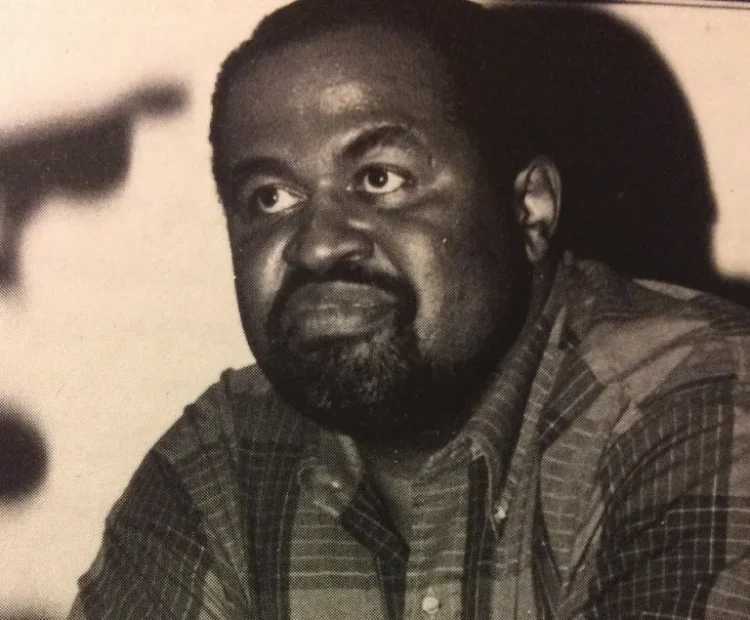
In memory of folklorist Gerald L. Davis, AFS will provide a limited number of grants of up to $500 to persons of color who want to attend the annual meeting.  Prospective applicants may be graduate students, community scholars, staff members of public folklore programs, or others who want to attend.  AFS will also waive annual meeting registration fees for Gerald L. Davis Fund grant recipients.  

Applicants should submit a letter stating their specific reasons for wanting to attend the AFS meeting, the impact they expect the meeting will have upon their work, estimated expenses, and the amount requested.  Applications will be reviewed and grant recipients selected by the AFS Task Force on Cultural Diversity.   

The deadline for applications is April 15, 2010.  Send letters of application by mail to Marilyn White, Chair, AFS Cultural Diversity Task Force, Department of Sociology and Anthropology, Kean University, Union NJ 07083 USA or by e-mail to mawhite@cougar.kean.edu.   

AFS Student Travel Stipends 

AFS will provide stipends of $300 each to selected students whose presentations are accepted for the annual meeting program.  There are no additional application requirements for these stipends; your presentation proposal, if accepted, will serve as your stipend application.  Decisions will be made on the basis of the quality of the proposal and geographical representation among students’ institutions.  Previous recipients of these stipends are not eligible.  We will notify recipients in July.

Archie Green Student Travel Awards 

The AFS Public Programs Section will provide up to three awards of up to $500 each, named for folklorist and activist Archie Green of San Francisco, for students to defray costs for traveling to the meeting.  The Section is interested in supporting graduate and undergraduate students who have an interest in working as public folklorists, or who have chosen an area of public folklore as a primary topic of research. 

Application materials will consist of: (1) a two-page letter written by the applicant, (2) a letter of support written by a faculty member or public folklorist that describes the student’s interest in public folklore and supports the student’s plan for using the AFS meeting to further her or his interests in public folklore, and (3) a budget outlining anticipated expenses.  The applicant’s letter should address her/his interest in public folklore, goals for attending the meeting, and plans for using the resources of the meeting to further her/his academic and/or professional development.  Previous recipients of student travel awards are not eligible to apply. 

The deadline for receipt of applications is July 1, 2010.  Awards will be announced by August 1.  To apply, send three copies of all materials to review committee chair Tamara Kubacki, Western Folklife Center, 501 Railroad Street, Elko NV 89801; tkubacki@westernfolklife.org.   

Stipends for International Participants 

The American Folklore Society warmly encourages the attendance of folklorists and other cultural specialists from outside the United States. International scholars are invited to contact Lee Haring, chair of the AFS Committee on International Issues, to discuss ways in which they might participate in the meeting. 

A limited number of travel stipends will be available on a competitive basis for international scholars and practitioners at a junior level who are participating in the annual meeting program.  Stipends will vary between $500 and $800, depending on the availability of funds and the number of applicants.  Previous recipients of international travel awards are not eligible to apply. 

The AFS particularly encourages applications from individuals who have limited or no institutional support for travel, as well as from independent scholars and freelance practitioners.  Applicants should be in the early stages of their careers.  We especially hope to hear from applicants from outside western Europe.  We also encourage preliminary inquiries.   

We encourage AFS members and sections to spread the word, to help identify potential applicants, to collaborate with international colleagues in the application process, or to provide or seek matching funds to complement the possible AFS award.  For example, by adding a visit to your campus or a consultation at your agency, you could fruitfully expand on an international visitor’s participation in the AFS meeting.  We especially welcome AFS member assistance in organizing panels that include international participants. 

Applications should include a brief curriculum vita and a letter briefly outlining what paper or other presentation the applicant will make, how she will benefit from attending the meeting, and how she plans to communicate the experience in her/his home professional context.  The overall goal of the travel awards is to increase international communication and awareness of international issues in our field.  Since the AFS has limited funding available, it is important for applicants to communicate their experience effectively to a larger professional community back home. 

The deadline for submission of applications isMarch 31, 2010.  Application may be made by mail, by fax, or by e-mail before March 1; after March 1, applications must be made by e-mail.  You must also submit all proposal and registration forms and information (as specified elsewhere in this Invitation for Participation) to the main AFS address by the same deadline.  Please direct your inquiries and applications to Lee Haring at lharing@hvc.rr.com.

2010 AFS Annual Meeting Deadlines and Important Dates

March 31
Online or postmark submission deadline for ALL proposals, registration forms, and registration fee payments
Deadline for applications for Gerald L. Davis Fund Travel Grants and for Stipends for International Participants
 
June 1
Notifications of acceptance sent
July 1
Preliminary program posted on AFS web site
Deadline for applications for Archie Green Student Travel Stipends 
July 15
Deadline for receipt of changes or corrections to preliminary program schedule  
August 31
Deadline for registration at lower pre-meeting rates  
Deadline for registration refunds 
Deadline for registration for pre-meeting tours and other special events, the details for which will be announced at the beginning of June 
October 13 
AFS 2010 Annual Meeting begins, Hilton Nashville Downtown